Real Estate
Do evergreens trees sour the soil?
By Carlos Mendoza
Advertisement · Why this ad?
Erik Svenson is a passionate arts journalist with over five years of experience in cultural reporting. He graduated from Minnesota State University and has worked for various arts publications in the region, highlighting local artists and events.
More from Erik →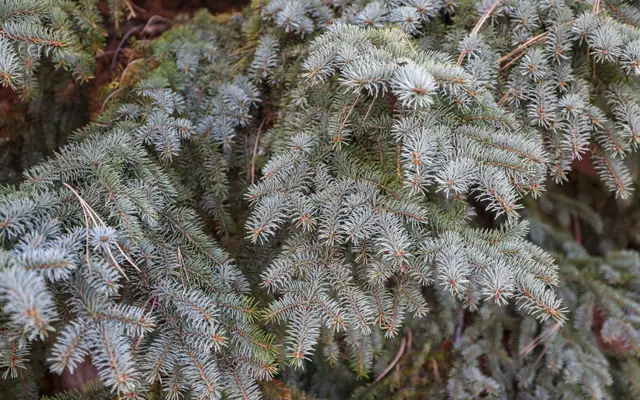
Advocates for ideas and draws conclusions based on the interpretation of facts and data.
Did you hear about the guy who passed the forest where loggers were clearcutting all the evergreen trees? He wondered what fir.
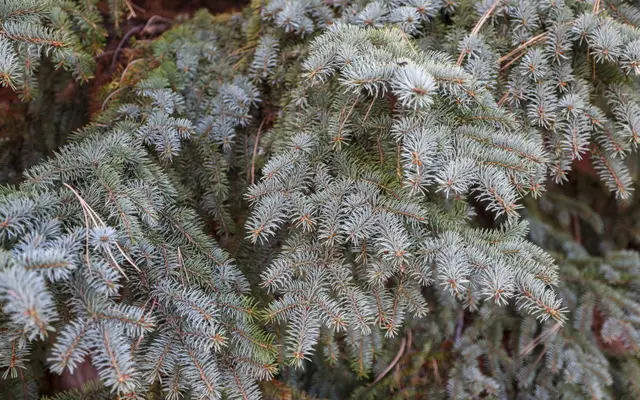
Is it true that evergreen trees make the soil too acidic to grow anything below them as needles accumulate? It’s a question I’m often asked.
As the story goes, plants won’t grow under spruce or pine trees, even after the trees have been removed, because the fallen needles turn the soil highly acidic.
If you said “not true,” you’re correct. Evergreens don’t turn the soil in which they’re growing acidic, even after decades of dropping needles.
The truth is that soil pH doesn’t change under spruce, pine and other evergreens. The soil-acidifying myth has been corrected by numerous research universities.
Studying the situation isn’t difficult. Researchers simply test the pH of soil underneath evergreens and compare it to the rest of the soil in the area.
The results consistently show that the soil pH underneath evergreens is generally the same as the pH of the soil in the rest of the yard or property.
How did the myth become so widespread and why does it persist? It’s been repeated so many times that it’s often accepted as fact.
It’s understandable where the misconception originated. Spruce and pine trees provide year-round greenery, wind protection and winter interest, and are popular landscape features.
It’s not easy, though, to grow anything below evergreen trees. The area below branches is often bare, and gardeners might wish to fill the space with groundcovers, perennials, or other plants.
The difficulty of growing anything below evergreens led to the conclusion that the needles must be the culprit, acidifying the soil and making it too sour for other plants to grow.
It’s true that evergreen needles are acidic when they fall from the tree, ranging in pH from about 3.2 to 3.8. Since 7.0 is neutral, neither acid nor alkaline, the acidity of the needles could lead to the assumption that they would acidify soil to which they’re added.
That’s not what happens, though. The pH of a material doesn’t necessarily allow it to change the pH of the soil to which it’s added. Soil has a remarkable natural ability to resist changes to its pH, which is why it’s difficult to grow acid-loving blueberries in alkaline soils, even by adding amendments.
As evergreen needles naturally decompose, soil microorganisms break down the compounds responsible for their acidity. The acid quickly breaks down without any appreciable pH change to the soil in which the needles are decaying.
The University of New Hampshire explains that even a 2-3 inches of evergreen needles won’t change soil pH enough to be measurable. Oregon State University horticulturists similarly address the misconception, explaining that decomposing microbes neutralize the acids in fallen needles.
This is especially relevant in the Northern Plains. The University of Saskatchewan researchers explain that prairie soils tend to be alkaline, and resist changes that would acidify their structure. They emphasize that soil beneath evergreens generally isn’t much different in pH from the surrounding yard.
If acidity from fallen needles isn’t the problem, why is it difficult to grow anything under evergreens?
Shade is sometimes suggested as the problem, but it’s even hard to grow shade-loving types like hosta and shade-tolerant groundcovers under evergreens. Lack of sunlight isn’t usually the chief cause.
The main reason it’s difficult to turn bare areas below evergreens into lush vegetation is the shallow-rooted nature of the tree’s root systems.
According to Iowa State University, the majority of spruce and pine roots, especially the roots responsible for water and nutrient uptake, are in the upper six to 18 inches of soil. That’s quite shallow.
If we could see the profile of the upper 18 inches of soil beneath established evergreens, we would visualize the area filled with fine feeder-type roots plus larger roots providing support.
Because that profile is consumed with evergreen roots that mine the soil for water and minerals, there’s not much moisture and nutrients left for other plants we might wish to grow. Soil below evergreens is often extremely dry, which suits spruce and pine, but not other vegetation.
If one does wish to grow perennials or groundcovers under evergreens, supply extra moisture during the growing season, and replenish depleted soil with fertilizer, and a preliminary soil test is recommended.
Not only do evergreen needles not make soil acidic, they’re a valuable mulch. Pine needles, which can be purchased bagged, make an excellent surface mulch in a perennial bed or landscape.
The science of monitoring our climate with guest Daryl Ritchison 5d ago Mulch around a panicle hydrangea is the best winter protection 6d ago What if this winter’s forecast holds true?
Advocates for ideas and draws conclusions based on the interpretation of facts and data.
What is this?
Don Kinzler, a lifelong gardener, is the horticulturist with North Dakota State University Extension for Cass County. Readers can reach him at [email protected].
Veeder: How could life get any better?
Date set, tickets on sale for Traditional Norsk Christmas Event at the Fargo Sons of Norway 22h ago By Staff reports Get Local Must Reads Men's Sports Pearl Harbor tour hit home for Bison linebacker Haugo 11h ago By Jeff Kolpack Fargo Embattled recovery and reentry nonprofit F5 Project looks ahead after turbulent year 18h ago By Tasha Carvell Local Teen bicyclist airlifted after being struck by pickup in Osage Township 21h ago By Staff reports Fargo Fargo man arrested for DUI after car crashes onto gas pump 15h ago By Hunter Schwartz
Carrington, North Dakota
Real Estate
Saturday, November 14, 2026
5 min
By Carlos Mendoza

By Carlos Martinez

By Diane Nguyen

By Carlos Martinez